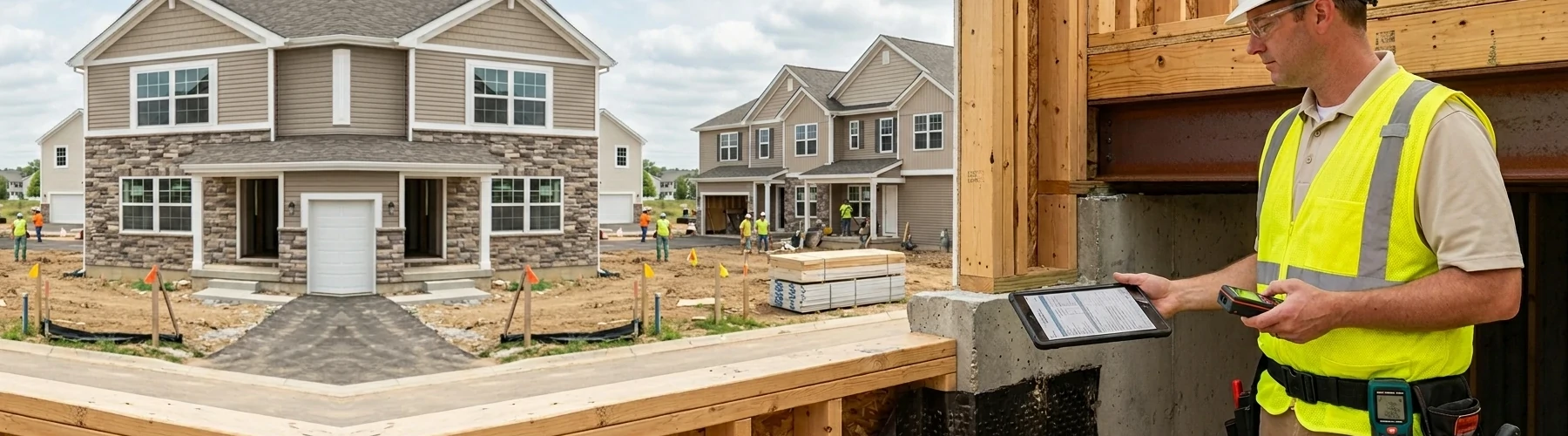
Why a City Code Inspection Is Not Enough
This is the one thing the team explains more than anything else. Homeowners in Chesterfield assume that if the city inspector signed off, the house is good. That's not how it works.
A municipal code inspection checks for minimum compliance. The inspector walks through with a checklist, did the framing pass, are the electrical boxes covered, is the plumbing vented. They're confirming the work meets code at that specific stage, not evaluating your home the way a structural engineer does. They can't. They've got maybe 20 minutes per visit, covering dozens of houses a week across the municipality.
A new construction inspection from a licensed engineer looks at things the code checklist doesn't touch:
- Whether the actual framing matches the stamped structural drawings
- Load path continuity from the roof down through the foundation
- Proper connection hardware at beams, headers, and posts
- Foundation conditions that might cause settling within the first few years
- Grading and drainage patterns around the slab or basement walls
According to the American Society of Home Inspectors, roughly one in five new homes has a defect that wouldn't show up on a standard code inspection. That number tracks with what the team sees in Chesterfield subdivisions near Wildhorse Creek and along the Highway 40 corridor.
Here's a scenario that comes up constantly. A builder frames a wall opening wider than what the plans called for. The header gets undersized because the framing crew used what was on the truck. The city inspector walks through, sees a header in place, and checks the box. But that beam is carrying more load than it was designed for. Two years later you've got drywall cracks and a sagging ceiling line, and nobody connects it back to framing day.
The city inspector isn't your advocate. They work for the municipality. A new construction inspection by a home inspection company puts a second set of eyes on your project, eyes specifically trained to catch structural problems before drywall covers them up.
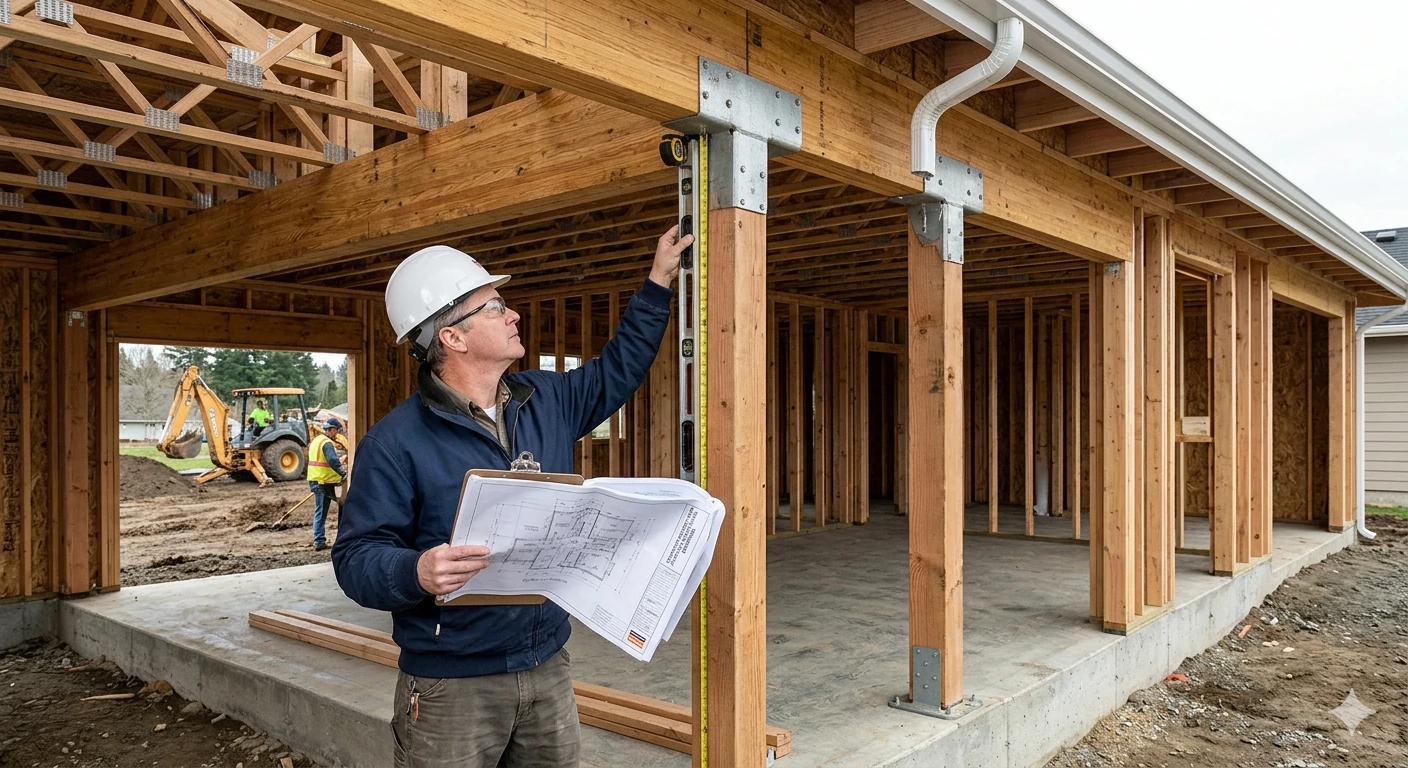
Pre-Drywall vs. Final Inspection: Choosing the Right Phase
Most homeowners building in Chesterfield hear "get an inspection" and assume that means one visit right before closing. The two phases that matter most are the pre-drywall inspection and the final walkthrough, and they catch completely different problems.
The pre-drywall phase is where the team finds the stuff you'll never see again. Once drywall goes up, framing, mechanical rough-ins, and structural connections disappear behind finished walls. If a joist hanger is missing or a beam isn't sized to match the stamped drawings, this is the only window to catch it without tearing something apart later.
What Each Phase Covers
Here's how the two inspections break down in practice:
- Pre-drywall: Framing accuracy, load path continuity, proper fastener schedules, header sizes, and whether the builder followed the structural drawings
- Final inspection: Visible finishes, grading and drainage around the foundation, doors and windows operating correctly, and any settlement cracks that appeared during construction
- Both phases together: A complete record of your home's structural condition from frame to finish
The pre-drywall inspection is where the team finds the most actionable issues. A missing Simpson tie or an undersized header in a Wildwood Crossing new build, that's the kind of thing that takes ten minutes to fix before drywall but thousands of dollars after.
If you're choosing one phase, go pre-drywall. The final walkthrough catches cosmetic and drainage concerns that matter, but structural problems hidden inside walls are harder to fix and more expensive to discover later.
Your builder's municipal inspections in Chesterfield focus on code minimums. The team's new construction inspection focuses on whether your specific plans were built the way they were engineered. Those are two different questions with two different answers.
Not sure which phase your project is in right now? Give us a call and the team can figure out the timing.
What a New Construction Inspection Covers
Most people assume a brand new home doesn't need a second set of eyes. That's the most common thing the team hears from homeowners in Chesterfield. But municipal inspectors are checking for code minimums, not whether your builder got the structural details right.
A new construction inspection goes deeper. The team looks at the actual structural work against your approved permit drawings, not just whether it passes a checklist.
Here's what a typical new construction inspection covers:
- Foundation walls and footings, checking for cracks, honeycombing, or improper curing
- Floor system framing, including joist spacing, bearing points, and proper connections
- Load-bearing walls and headers to confirm they match the approved structural drawings
- Roof framing and truss installation, looking for missing bracing or incorrect fasteners
- Drainage and grading around the foundation to catch water issues before they start
Each of those items ties back to how your home will perform over the next 20 or 30 years. A missed connection at a beam pocket won't show up on move-in day. It shows up five years later when your floor starts bouncing or a crack opens in the drywall above a door frame.
This is where most problems hide. A framer substitutes a smaller header. A foundation wall gets poured two inches shorter than spec. These things happen on job sites in the Wildhorse neighborhood and across Chesterfield, it's the reality of construction.
According to the American Society of Home Inspectors, roughly one in five new homes has a structural deficiency that goes undetected during standard municipal inspections. Industry tools like the construction fire safety inspection app from AWC reflect how the industry is moving toward more systematic, phase-by-phase verification on new builds.
The scope isn't just "walk through and look around." It's a licensed structural engineer reviewing every major system that holds your home together. Your builder might be great. Verifying the work is how you protect your investment.
Drainage, Soil, and Structural Risks in Chesterfield Builds
Most new construction in Chesterfield sits on expansive clay soil. That's not a dealbreaker, but it changes everything about how a foundation should be designed and how drainage has to perform from day one.
The team sees this pattern regularly. A builder grades the lot, pours the slab or foundation walls, and moves on. Three months after closing, the homeowner notices a crack running along the basement wall or a door that won't latch. The soil shifted, water found a path it shouldn't have, and nobody caught the grading issues before drywall went up.
During a new construction inspection, the team looks at specific risk factors tied to Chesterfield's geology and building conditions:
- Soil compaction around the foundation, especially on lots that were recently cleared or filled
- Grading slope away from the structure, which should fall at least six inches over the first ten feet
- Downspout discharge locations and whether they route water toward or away from the foundation
- Sump pit placement and discharge line routing in finished basements
- Cracks or settling signs in poured walls before they get covered by framing and insulation
Neighborhoods near Wildhorse Creek and parts of Chesterfield Valley sit in areas with higher water tables. Builds in those zones need extra attention on waterproofing details and foundation drain tile systems. The builder may install these correctly on paper, but "correctly on paper" and "correctly once backfill is in place" can be two different things.
Once your builder finishes the basement and covers those walls, you lose access. You can't see the waterproofing membrane. You can't check whether the drain tile was crushed during backfill. A new construction inspection at the right stage catches these problems while they're still fixable, not after you're mopping up water in January.
Clay soil doesn't forgive bad drainage. It holds moisture, expands, and pushes against foundation walls with real force. The team documents every drainage concern with photos and measurements so your builder has clear direction on what needs to change.
How to Use Your Inspection Report With the Builder
The report only matters if it changes something. A lot of homeowners in Chesterfield get a detailed inspection back and then aren't sure what to do next. They don't want to start a fight with the builder. The report isn't a weapon. It's a checklist.
Every finding in a new construction inspection report gets a priority level. Some items need fixing before the next phase of construction. Others can wait until the final walkthrough. The team organizes findings so you can hand the report directly to your builder and say, "Here's what needs attention." No guessing.
Getting the Most Out of the Conversation
Start with the structural items. Those are non-negotiable. If the report flags a framing connection that doesn't match the approved structural drawings, that gets addressed before drywall goes up. Cosmetic issues like a scuffed baseboard or minor drywall seam can wait. A missing joist hanger or an undersized header cannot.
Here's how to approach the builder meeting:
- Share the full report, not just the summary page. Builders respect transparency.
- Ask for a written response to each flagged item with a timeline for correction.
- Request a follow-up walkthrough after repairs are done so you can verify the work.
- Keep copies of everything, the original report, the builder's response, photos of completed fixes.
In neighborhoods like Wildhorse Creek and Clarkson Valley, the team sees builders who actually welcome third-party reports because it keeps their own crews accountable. A good builder often already knows about half the items on the list and appreciates the heads-up before the municipal inspector shows up.
And if a builder pushes back or dismisses a finding? That tells you something important. A licensed structural engineer's report carries weight with the local building department. Your builder knows that.
Need help walking through your report? Give us a call and the team can talk you through it before your next builder meeting.
Frequently Asked Questions
Does a city inspection in Chesterfield mean my new home is structurally sound?
No — a city inspection only checks that your home meets minimum code requirements. Municipal inspectors in Chesterfield spend about 20 minutes per visit covering dozens of homes. They confirm code boxes are checked, not whether your builder followed the stamped structural drawings. A new construction inspection looks at load paths, header sizes, framing connections, and foundation conditions that a code checklist never touches.
Should I get a pre-drywall inspection or wait until the final walkthrough?
If you can only choose one, get the pre-drywall inspection. Once drywall goes up in your Chesterfield new build, framing, joist hangers, and structural connections are hidden permanently. A missing Simpson tie or undersized header takes minutes to fix before drywall but costs thousands after. The final walkthrough still matters for drainage and cosmetic issues, but structural problems are best caught before walls close.
What specific problems do new construction inspections find most often in Chesterfield?
The most common issues in Chesterfield subdivisions near Wildhorse Creek and the Highway 40 corridor are undersized headers, missing connection hardware at beams, and grading problems around foundations. Framers sometimes substitute smaller lumber than what the plans called for. Foundation walls occasionally get poured shorter than spec. These problems don't show up on move-in day — they show up as bouncing floors or drywall cracks years later.
How is a new construction inspection different from what my builder's inspector does?
Your builder's municipal inspector works for the city, not for you. They verify minimum code compliance at each construction stage. A new construction inspection compares the actual work against your approved structural drawings to confirm your builder built what was engineered. Those are two different questions. One in five new homes has a defect that standard code inspections miss, according to the American Society of Home Inspectors.
When is the right time to schedule a new construction inspection in Chesterfield?
Schedule the pre-drywall inspection right after framing and mechanical rough-ins are complete but before insulation and drywall go up. For the final inspection, aim for a few days before your closing date. Timing matters because once construction moves past a phase, that window closes. If you're not sure where your project stands, call and the team can figure out the right timing based on your build schedule.