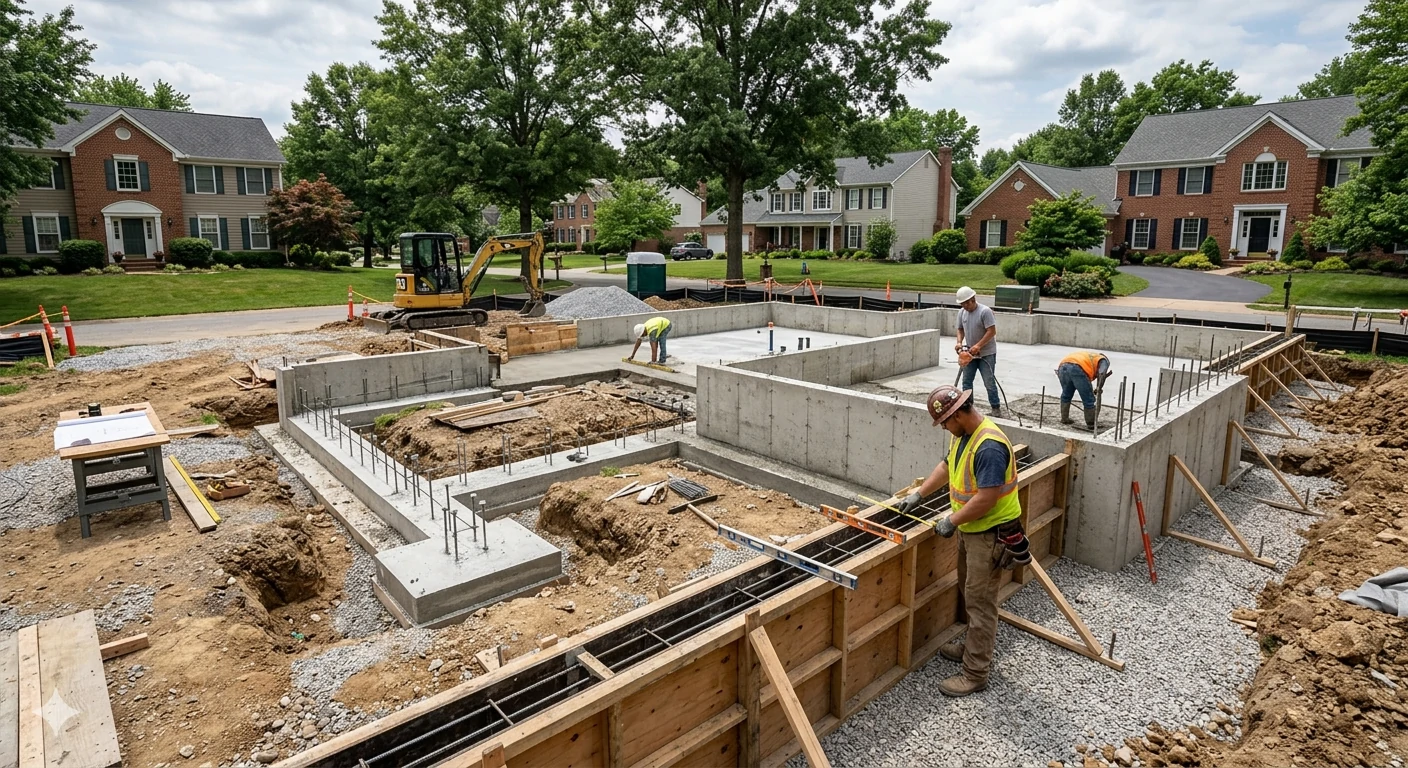
What Foundation Design Services Actually Deliver
Most homeowners in Chesterfield don't call about foundation design services because they woke up excited about soil reports. They call because a contractor told them they need engineered plans from consulting engineers before the permit office will even look at their project. That's the real starting point for most of these conversations.
So here's what you're actually getting. The team takes your project, whether it's a new build, a room addition, or a structural repair, and produces stamped foundation drawings that show exactly how your foundation needs to be built. Not a guess. Not a sketch on a napkin. A set of calculations and drawings that an inspector can review and approve.
Foundation design covers a lot of ground. Every project is different, but the deliverables usually include:
- Footing sizes and depths based on your soil conditions and structural loads
- Reinforcement details, including rebar spacing and placement
- Anchor bolt layouts that tie your framing to the foundation correctly
- Drainage and waterproofing notes where Chesterfield's clay-heavy soils demand extra attention
The projects that stall at the permit counter are missing one of those elements. The plans look complete to a homeowner but don't answer the questions the building department is trained to ask.
A foundation designed by a licensed structural engineer accounts for the actual loads your home puts on the ground. That matters more than people think, especially in areas like Wildhorse and Chesterfield Valley where soil behavior varies block to block. Clay soils expand when wet and shrink when dry. A foundation that ignores that reality cracks. It's not a matter of if.
The team doesn't hand you a generic template pulled from a textbook. Your foundation design reflects your specific lot, your specific structure, your specific code requirements. According to the International Code Council, foundation systems must be designed for the actual soil bearing capacity at the building site. That's the standard, and it's the standard the team builds every set of plans around.
What you walk away with is a permit-ready package. Stamped drawings, structural calculations, and a set of plans your project won't get kicked back on at review.
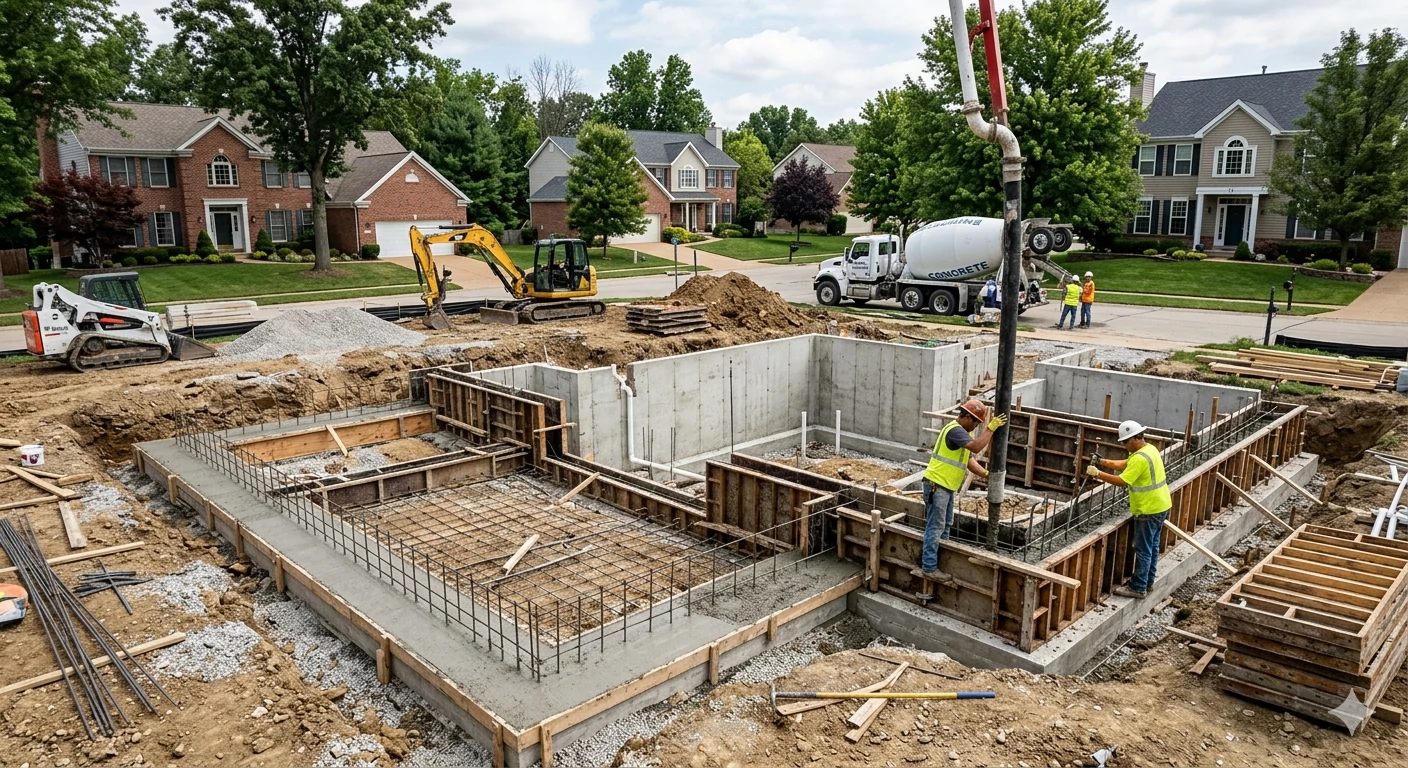
Soil Conditions That Shape Every Foundation Decision in Chesterfield Valley
Most foundation problems don't start with the foundation. They start with the dirt underneath it.
Chesterfield Valley sits on a floodplain with alluvial soils that shift dramatically depending on where your lot falls. Some parcels have dense clay that swells when it rains and shrinks in a drought. Others sit on loose fill from past grading projects. A few spots closer to the Monarch Levee District have sandy layers that don't hold load the way people assume. The team sees this range across Chesterfield every week, sometimes on the same street.
The soil type dictates everything: footing depth, footing width, whether you need piers, and what kind of drainage system goes around the perimeter. A foundation designed for stable clay won't perform on expansive clay. According to the American Society of Civil Engineers, expansive soils cause more financial damage to structures annually than floods and earthquakes combined. That's not a scare tactic. It's just the reality of building on reactive ground.
The conditions the team typically encounters in Chesterfield fall into a few categories:
- High-plasticity clay that moves with seasonal moisture changes
- Engineered fill from previous development that may not be compacted to spec
- Mixed alluvial deposits near creek corridors and low-lying areas
- Shallow rock in elevated sections near Wild Horse Creek Road
Each one calls for a different approach. A geotechnical report tells the team what's actually down there, not what someone guessed during a walk-through. The soil report is the single most important document in the foundation design process. Without it, you're designing blind.
So before any footing size gets calculated or any structural drawing gets started, the ground has to be understood. Your contractor might say "it looks fine." That's not engineering. The team reads the boring logs, checks the bearing capacity numbers, and designs your foundation to match what the soil can actually support. That's the difference between a foundation that lasts and one that cracks in three years.
When a Project Requires Engineered Foundation Plans
Most homeowners don't wake up thinking about foundation design services. They're thinking about the addition they want to build, the sunroom they've been planning, or the basement they finally want to finish. Then someone at the permit office tells them they need stamped structural drawings before anything moves forward. That's usually when the phone rings.
Not every project needs engineered foundation plans. But more do than people expect. Here are the most common situations the team sees in Chesterfield:
- New home construction on lots with expansive clay soils or variable slope
- Room additions that tie into an existing foundation
- Finished basements where load paths change or new columns get added
- Decks or sunrooms with frost-depth footings that need to match local code
- Any project where the building department flags your plans as incomplete
It's the same story every time. A contractor submits plans, the reviewer kicks them back, and suddenly the project is stalled. The fix isn't complicated, it just requires an engineer to size the footings, specify the rebar layout, and confirm the soil bearing capacity works for what you're building.
Chesterfield sits on some tricky ground. Parts of the Wildwood border and the neighborhoods around Chesterfield Valley have fill soils from old floodplain work. Other areas closer to Clarkson Road sit on clay that swells and shrinks with moisture. The team reviews soil reports for projects in this area every week, and the foundation design has to account for what's actually underneath your lot.
According to the International Code Council, residential foundations must be designed to resist all applicable loads including lateral soil pressure and frost heave. That's the rule your inspector is enforcing. So when your permit application comes back with a note that says "provide engineered foundation design," that's the code talking.
Getting the foundation design done early actually speeds everything up. Your contractor pours exactly what's on the drawings, the inspector checks it against the stamped plans, and you move on to framing. No surprises at the footing inspection. No rework.
The Foundation Design Process from Site Visit to PE Stamp
Most homeowners picture foundation design as one step. It's not. There's a clear sequence, and skipping any part of it is how projects get delayed at the permit counter in Chesterfield.
Here's how the team moves through it:
- Site visit and soil assessment. The team walks your lot, checks grades and drainage patterns, and reviews any existing geotechnical reports. If you don't have a soil report yet, that gets flagged right away. Soil conditions in parts of Chesterfield, especially around the Wildhorse and Clarkson Valley edges, can vary a lot within a single subdivision. Clay content matters here more than most people realize.
- Load analysis. Every wall, roof system, and floor above your foundation puts weight somewhere. The team calculates exactly how much load each footing needs to carry. This is where a room addition or a second-story plan changes everything about what's happening underground.
- Foundation type selection. Slab-on-grade, crawl space, full basement. The right choice depends on your lot's slope, the soil bearing capacity, and what Chesterfield's building code requires for your specific zoning. Not every lot works for every type.
- Structural drawings. Footing sizes, rebar schedules, anchor bolt spacing, stem wall details. All of it gets drawn to meet the International Residential Code and local amendments. These are the pages your contractor actually builds from.
- PE stamp and submission. A licensed professional engineer reviews and stamps the final set. That stamp is what the permit office needs to move your application forward.
The project that stalls at permitting is almost always missing one of those middle steps. A contractor submits a plan with footing sizes pulled from a rule of thumb, the reviewer kicks it back, and now you're three weeks behind.
The whole process from first site visit to stamped drawings typically runs two to three weeks. Complicated lots or unusual structures can push that longer. The team keeps you updated at each stage, and your contractor gets a set of plans that actually answers what the inspector is going to ask.
Missouri PE Stamp Requirements and the Chesterfield Permit Process
Every foundation design submitted for permit in Chesterfield needs a PE stamp. No exceptions. The city requires that a licensed Professional Engineer in the state of Missouri sign and seal the structural drawings before the building department will even look at them. This trips up a lot of homeowners who think their contractor's plans are enough to get started.
Here's what that PE stamp actually means. It tells the plan reviewer that a licensed engineer took responsibility for the design, ran the calculations, and confirmed the plans meet the International Residential Code and local amendments. Without it, your application goes straight to the rejection pile. The team sees this happen almost every week, usually with homeowners who are already behind schedule on a new build or addition in the Clarkson Valley area.
Chesterfield's building department falls under St. Louis County jurisdiction, which adds a layer most people don't expect. The county reviews structural plans separately from architectural plans. That means your foundation design package needs to be complete and standalone, it can't reference another set of drawings that hasn't been submitted. The structural calculations, the footing details, the reinforcement schedules, the soil bearing assumptions. All of it needs to be in one package, stamped and ready.
A few things that commonly hold up permits in Chesterfield:
- Missing soil report data or assumed bearing capacity without justification
- Incomplete reinforcement details at stepped footings
- Foundation plans that don't match the architectural site plan dimensions
- No PE stamp or an out-of-state stamp without Missouri reciprocity
According to the National Council of Examiners for Engineering and Surveying, each state sets its own rules for PE licensure and plan stamping. Missouri is strict about this. An engineer licensed in Illinois or Kansas can't stamp your Chesterfield plans unless they hold a valid Missouri license too.
The team prepares every foundation design package with the county's review checklist in mind. That's not a small detail. It's the difference between a two-week approval and a two-month back-and-forth that stalls your entire project.
Frequently Asked Questions
Do I really need engineered foundation plans for a room addition in Chesterfield?
Yes, most room additions in Chesterfield require stamped foundation drawings before the permit office will approve your project. If your addition ties into an existing foundation or changes how loads move through the structure, the building department will flag your plans without an engineer's stamp. This is one of the most common reasons projects stall at the permit counter. Getting engineered plans upfront saves you weeks of back-and-forth with the reviewer.
How do Chesterfield's clay soils affect my foundation design?
Clay soils in Chesterfield expand when wet and shrink during dry spells, which puts constant pressure on your foundation. Areas like Chesterfield Valley and neighborhoods near Wild Horse Creek Road sit on soils that shift dramatically by season. A foundation designed without accounting for that movement will crack. Your footing depth, footing width, and perimeter drainage all get adjusted based on what the soil report shows for your specific lot.
What does a geotechnical or soil report actually tell the engineer?
A soil report tells the engineer what's actually underground on your lot — not a guess based on how the ground looks. It includes boring logs, soil bearing capacity numbers, and moisture data. In Chesterfield, that matters because two lots on the same street can have completely different soil conditions. The report is what determines footing size, footing depth, and whether your project needs piers or special drainage. Without it, the engineer is designing blind.
What do I get at the end of the foundation design process?
You get a permit-ready package that includes stamped drawings, footing details, rebar placement specs, anchor bolt layouts, and structural calculations. These are the documents your building department needs to approve your project. Generic templates don't pass review because inspectors ask specific questions about your soil conditions and structural loads. Every set of plans the team produces reflects your specific lot, your specific structure, and Chesterfield's local code requirements.
Why do foundation plans get kicked back at the Chesterfield permit office?
Plans get rejected when they're missing key details like footing sizes based on actual soil bearing capacity, rebar spacing, or drainage notes. The plans might look complete to a homeowner but still leave out what a building reviewer is trained to check. This happens most often with additions and new builds in areas like Chesterfield Valley where soil conditions require extra documentation. A licensed structural engineer produces plans that answer those questions before the reviewer even asks them.
How long does it take to get foundation design plans completed?
Timeline depends on whether a soil report is already in hand and how complex your project is. A straightforward room addition with an existing geotechnical report moves faster than a new build on a lot with variable fill soils. Most projects in Chesterfield move from soil review to stamped drawings in one to three weeks. Starting the foundation design process before you submit for permits keeps your project on schedule instead of waiting on a plan resubmittal.